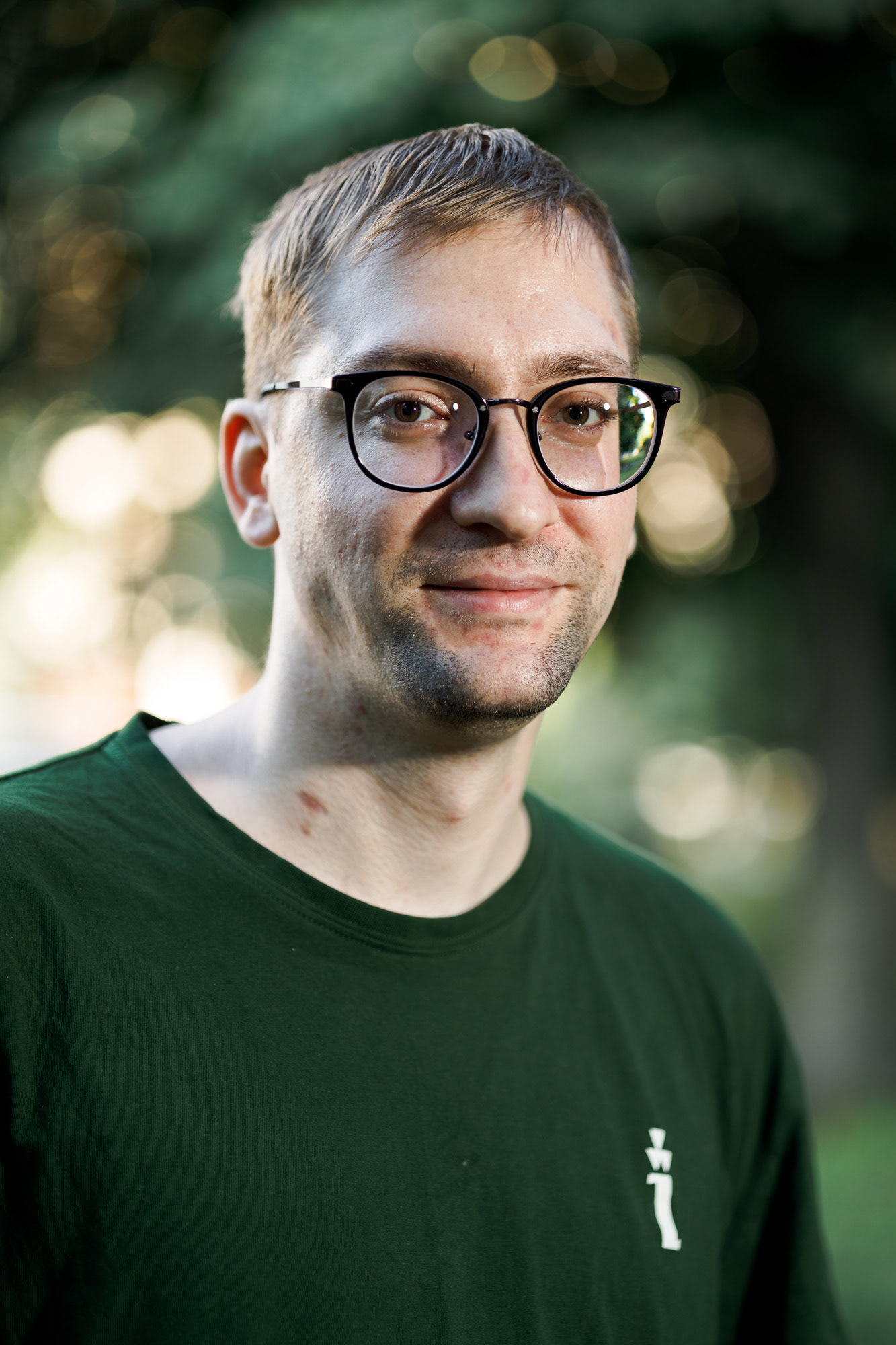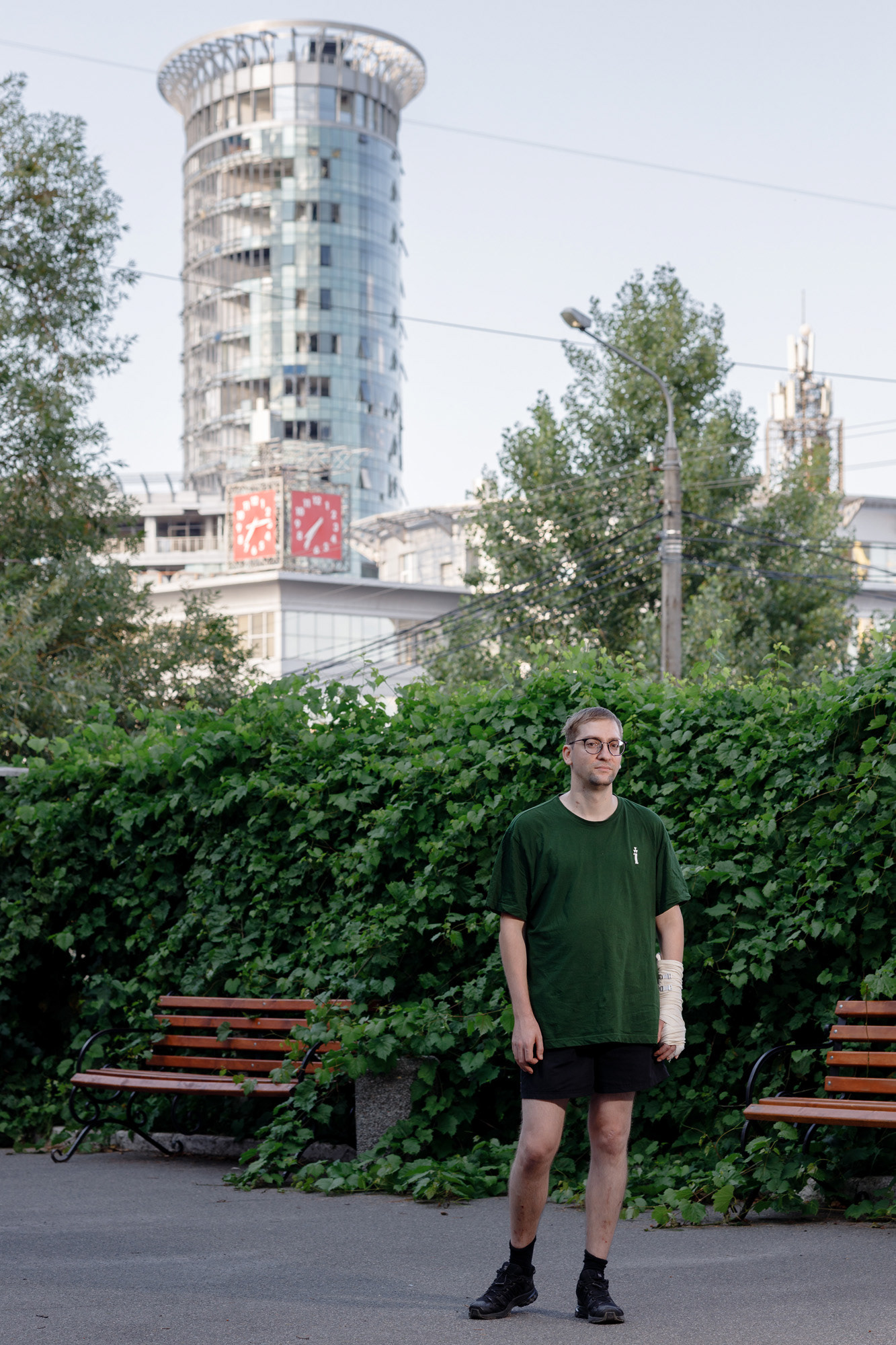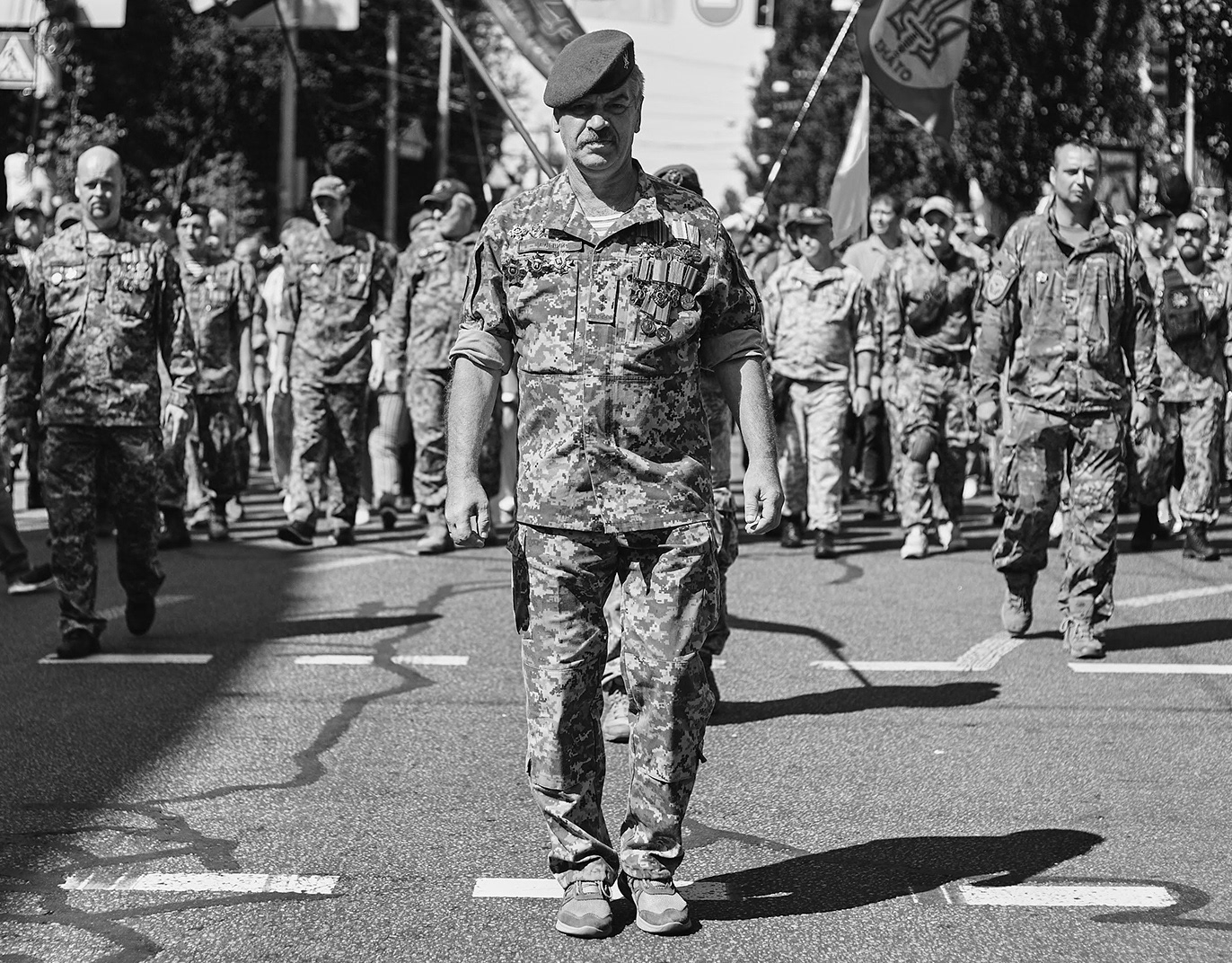
This project is a series of portraits and essays ofabUkrainian soldiers who were wounded and are undergoing recovery. The photographs focus not only on the visible consequences of war but also on the people behind them—their experiences, efforts, and gradual return to everyday life. It is an attempt to present the war through individual stories, where the personal and the collective are closely intertwined.
Oleh Symoroz
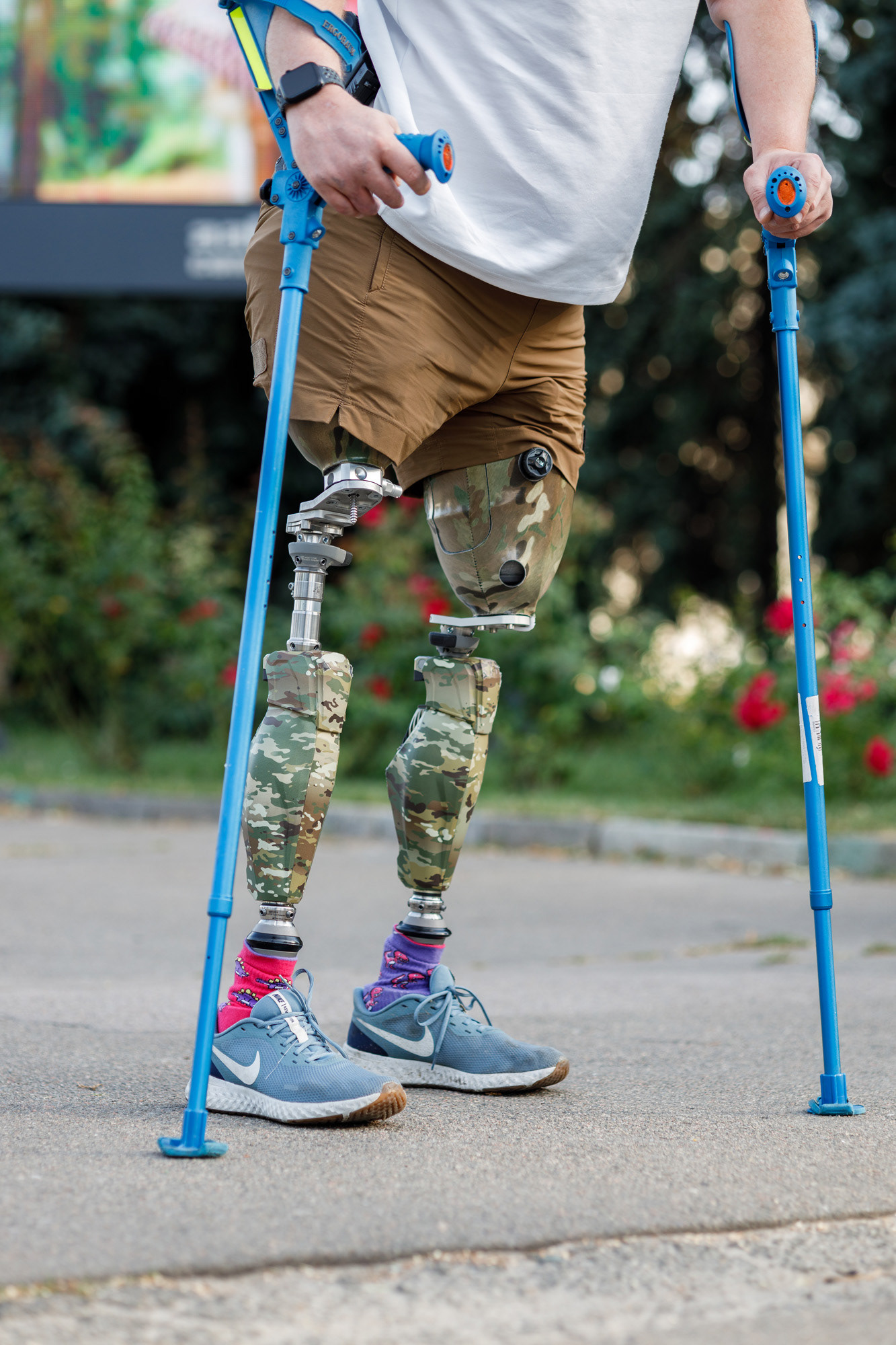
On October 20, 2022, near Kremenna on the border of Donetsk and Luhansk regions, Oleh Symoroz sustained severe injuries when his vehicle hit an anti-tank mine. He lost both legs, suffered fractures in his arms, and sustained serious facial injuries. His comrades quickly evacuated him, and doctors in Dnipro performed an additional amputation of his right leg above the knee. Surviving such an explosion was a miracle, but ahead lay another battle: fighting infections, pain, rehabilitation, and psychological acceptance of his new life.
Through fundraising efforts, over $127,000 was raised for high-tech prosthetics from Protez Foundation in the USA. Oleh received Ottobock Genium X3 microprocessor knee modules, which allow him to swim, climb stairs, and run. The prosthetic center did not charge for their work, and Protez Foundation covered the warranty, travel, accommodation, and transportation costs.
After months of fighting for his life, the next challenging phase was adapting to the prosthetics. Rehabilitation required daily work, patience, and physical effort, as learning to walk again after high amputations is a complex and exhausting process. Balance, endurance, and coordination all had to be relearned. With the help of doctors and rehabilitation specialists, Oleh gradually regained his mobility. This journey continues, but thanks to the support of caring individuals, he has a chance at a quality recovery.
Oleh is actively involved in community work and participates in numerous initiatives aimed at supporting veterans and improving conditions for people with disabilities. He is active on X, organizing events and promoting social change. His dedication and commitment to the cause inspire and motivate many.
Additionally, Oleh focuses on anti-corruption activities. He works to strengthen transparency in government institutions, combats corruption, and advocates for honest governance. His initiatives aim to ensure effective oversight of public funds and protect citizens from abuses of power.
Through fundraising efforts, over $127,000 was raised for high-tech prosthetics from Protez Foundation in the USA. Oleh received Ottobock Genium X3 microprocessor knee modules, which allow him to swim, climb stairs, and run. The prosthetic center did not charge for their work, and Protez Foundation covered the warranty, travel, accommodation, and transportation costs.
After months of fighting for his life, the next challenging phase was adapting to the prosthetics. Rehabilitation required daily work, patience, and physical effort, as learning to walk again after high amputations is a complex and exhausting process. Balance, endurance, and coordination all had to be relearned. With the help of doctors and rehabilitation specialists, Oleh gradually regained his mobility. This journey continues, but thanks to the support of caring individuals, he has a chance at a quality recovery.
Oleh is actively involved in community work and participates in numerous initiatives aimed at supporting veterans and improving conditions for people with disabilities. He is active on X, organizing events and promoting social change. His dedication and commitment to the cause inspire and motivate many.
Additionally, Oleh focuses on anti-corruption activities. He works to strengthen transparency in government institutions, combats corruption, and advocates for honest governance. His initiatives aim to ensure effective oversight of public funds and protect citizens from abuses of power.



Tymur
Before the full-scale invasion, Tymur worked at an advertising agency, creating campaigns. When the war began, he was in Bukovel. He returned to Kyiv and immediately enlisted.
For three months, he served in a security company in the rear, in Kyiv. When the Russians retreated from the capital, he submitted a report and was transferred to a combat unit. That’s how he ended up on the front line.
For three months, he served in a security company in the rear, in Kyiv. When the Russians retreated from the capital, he submitted a report and was transferred to a combat unit. That’s how he ended up on the front line.
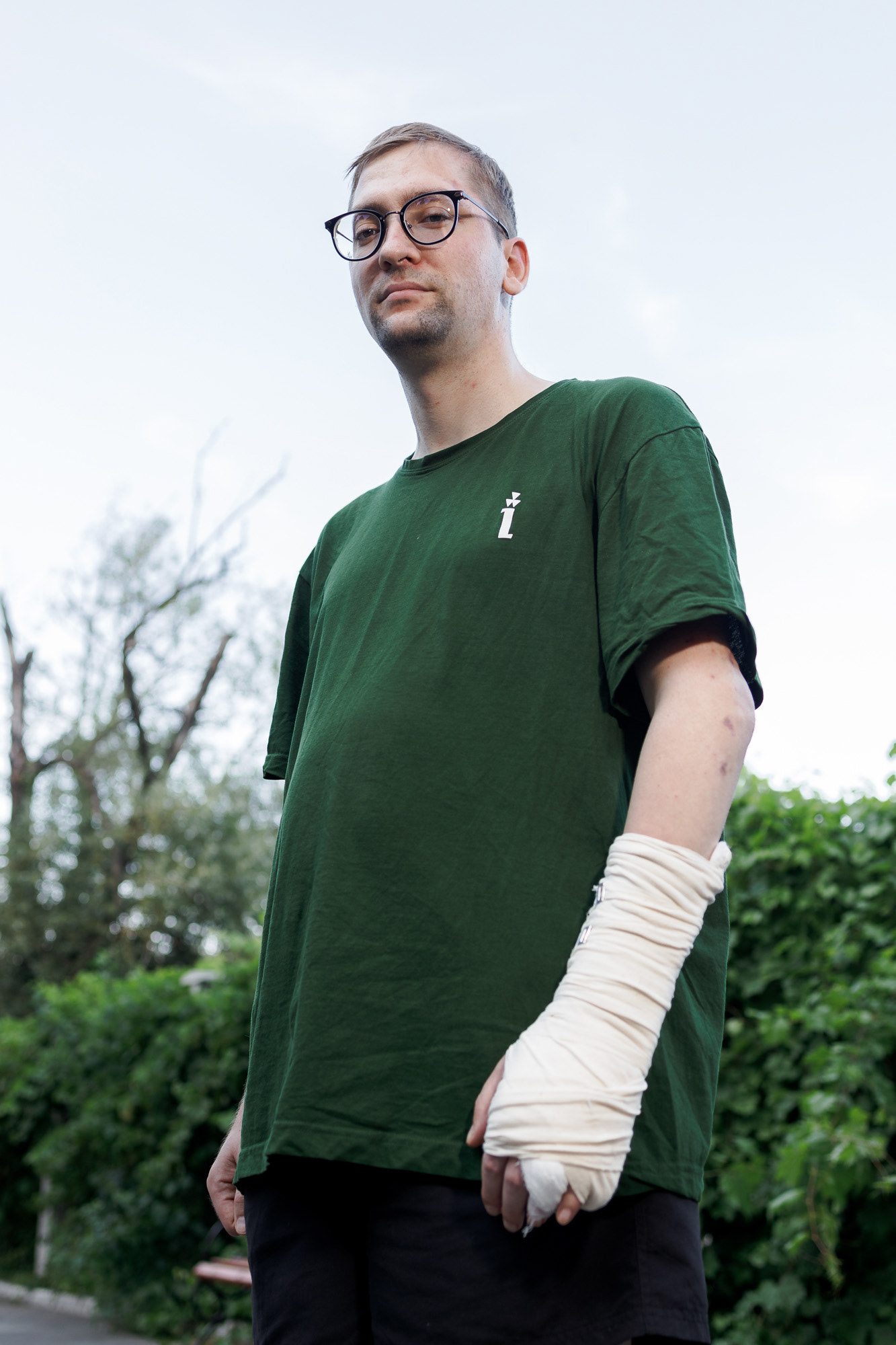
On September 15, 2022, during his third deployment, a Russian tank fired at their group—the shell landed nearby. Tymur sustained a shrapnel injury to his right arm: his shoulder was shattered, and a fragment passed straight through. The bones were held together only by muscle.
He understood evacuation would take a long time, and without blood supply his arm would not survive more than two hours. So he didn’t tighten the tourniquet fully. He lay there for six hours, bleeding, waiting.
He underwent X-rays in Bereznehuvate, Novyi Buh, Mykolaiv. In each city, doctors said: “We can’t help, go further.” Only in Odesa, at the 10th City Hospital, did they agree to operate. Treatment lasted three months.
Now Tymur is in rehabilitation. His arm will never fully recover, but he trains what he can. The arm doesn’t rotate properly, it’s hard to reach for something on a high shelf, it tires quickly and “gives out.” He can’t lift heavy objects—the joint won’t hold. But from a distance, it’s barely noticeable that anything is wrong.
His employer kept his job. After being discharged from the army—though he wanted to stay—Tymur returned to the agency. He now works with 3D models, branded constructions, and oversees production.
He cautiously goes to the gym and dreams of returning to crossfit. He says he has already adapted to life after the injury.
The interview was recorded in August 2024.

Abrykos
In the spring of 2023, “Abrykos” served in the 4th Brigade of the National Guard. Near Lyman, his unit came under attack by a Lancet drone. He was wounded—shrapnel throughout his body, a punctured lung, a brain contusion, a destroyed joint, and the removal of his spleen.
He survived by chance—at that moment, he had climbed into a vehicle to tidy up some things. Civilians driving by evacuated him. Then came Lyman, Sloviansk, Dnipro, Kyiv. And a coma.
During rehabilitation, his left arm did not function properly, yet he did not give up on his goal of piloting drones again.
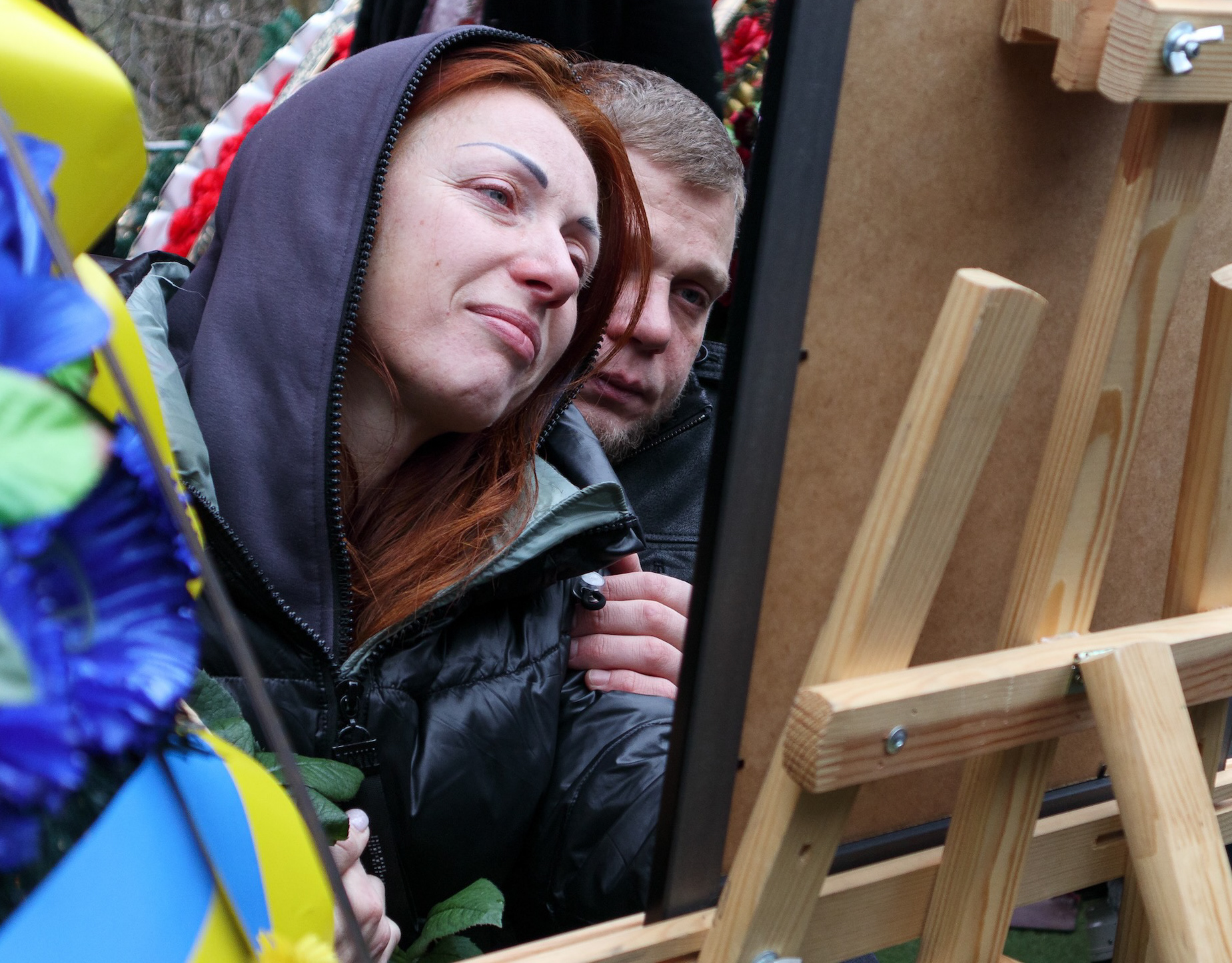
After the funeral of Roman Ratushnyi, Abrykos decided he would not stay at home. He said he didn’t want Ukraine to be occupied. Almost all of his friends are soldiers or volunteers. Conversations and therapy help keep his mind steady, though he still feels a dissonance with civilian reality.
The interview took place in August 2024.
Since then, Abrykos has already returned to military service.